


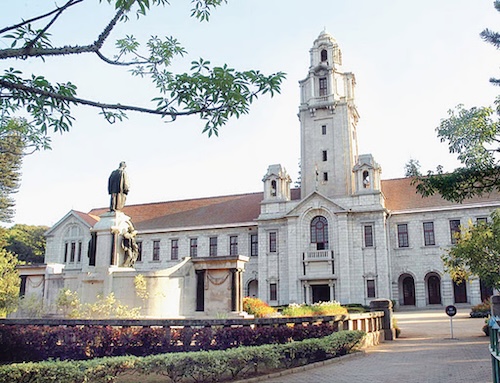
A Defining Landmark
The Indian Institute of Science (IISc), established in 1909 in Malleswaram, Bangalore, stands as one of India's most prestigious research institutions and a defining landmark of the neighborhood. What began as a visionary dream has grown into a global center of scientific excellence, shaping India's technological landscape for over a century.
The Seeds of a Vision
The institute's origins trace back to a chance encounter between industrialist Jamsetji Nusserwanji Tata and spiritual leader Swami Vivekananda. During a voyage to the United States aboard the SS Empress of India, their conversation planted the seeds for what would become India's premier research institution. Vivekananda, recognizing the need for self-reliance in science and technology, encouraged Tata to build a research institution in India rather than seeking validation from European institutions. This meeting ignited Tata's passion for establishing a research institute for India that would foster indigenous knowledge, curb brain drain, and enable Indian graduates to pursue advanced studies within their homeland.
Choosing Bangalore
Originally intended for Bombay, the institute's location became a subject of considerable debate. The turning point came when British chemist and Nobel Laureate Sir William Ramsay was invited to identify a suitable site. While Tata preferred Bombay, Ramsay recommended Bangalore for its favorable climate and serene environment—ideal conditions for research and learning. The decisive support came from the Maharaja of Mysore, Shri Krishnaraja Wodeyar IV, and the Regent Queen Maharani Kempananjammani Vani Vilasa Sannidhana. The Mysore state generously granted 371 acres of land and provided crucial financial assistance, ensuring that Bangalore would become the institute's permanent home.
Opening Its Doors
After years of negotiations with the British Raj and overcoming numerous bureaucratic hurdles—including Tata's untimely death in 1904—the Indian Institute of Science officially came into being on May 27, 1909. The institute opened its doors in Malleswaram with initial departments in Chemistry and Electrical Technology under its first Director, English chemist Morris Travers. Twenty-four students enrolled when classes began in 1911.
Rising to National Prominence
From its Malleswaram campus, IISc quickly rose to national prominence. Visionary scientists like Nobel Laureate Sir C.V. Raman and aerospace pioneer Satish Dhawan contributed significantly to its growth, establishing the institute as a cornerstone of India's scientific development. The institution played key roles in the country's nuclear energy program, space exploration initiatives, and defense sector advancement.
A Living Legacy
Today, nestled in its lush North Bangalore campus that has expanded far beyond its original Malleswaram roots, IISc continues to embody Tata's vision. The institution has diversified into cutting-edge fields like nanoscience, brain research, and environmental sustainability. It maintains close industry collaborations, incubates startups, and remains deeply engaged in national scientific missions. From a dream shared between Jamshetji Tata and Swami Vivekananda, IISc has evolved into one of Malleswaram—and India's—most significant landmarks and continues to serve as an important center for scientific research and education in the country.
Indian Institute of Science
