


A Historic Purchase
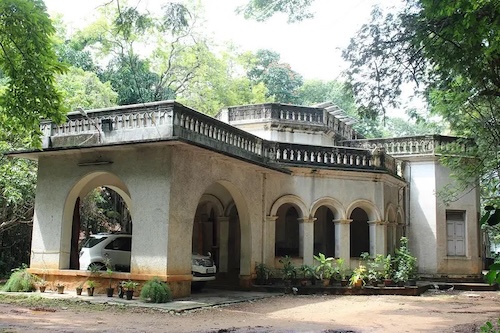
Panchavati, the historic residence of Nobel laureate Sir C.V. Raman, is located on 15th cross in Malleswaram, Bengaluru. Purchased by him in 1942, the house sits on a 2.5-acre property surrounded by lush greenery, including fruit trees planted by the scientist himself. The house was built in 1905 by B Jagdeo Kumaraswamy Naik, the then Deputy Commissioner of Bangalore.
Choosing the Perfect Home
It is said that at the time, Sir CV Raman had his eye on the only double-story house among the three on sale. Lady Lokasundari Ammal, his wife preferred one of the single-story houses, as they would be enough for one's later years. It was then named by her after the mythical hermitage of Rama and Sita—reflecting the couple's deep cultural ties.
Architectural Character
The single-story colonial bungalow, built with brick and lime, features a unique hexagonal hall where Lady Raman played the veena and once housed an extensive library filled with books on science and literature. Although it did not have a courtyard like most Indian bungalows, it resembled colonial bungalows in its plan, with its large central hall and rooms.
Cultivating the Garden
When the Ramans moved into the house in 1948, the garden only had a few coconut trees. The trees still seen at the Panchavati plot today have been planted by the Ramans. There was also a rose garden and a cowshed with cows.
A Space for Social Welfare and Culture
Beyond being a home, Panchavati played a role in social welfare initiatives, particularly those led by Lady Raman for women and children. Today, the 2.25-acre plot is maintained by The Raman Research Institute Trust. The house has evolved into a space for scientific and cultural engagement, hosting events like art exhibitions while preserving its historical significance. It remains a tribute to Raman's legacy, offering insight into the life and environment that nurtured one of India's greatest scientists.
Source:
Discovering Bengaluru, Meera Iyer. (176).
Panchavati
