


The Hessarghatta Revolution
In 1896, Bengaluru experienced a transformative moment when modern engineering first tackled the city's chronic water scarcity. The Hessarghatta water supply initiative revolutionized urban water management by converting a 15th-century reservoir on the Arkavathy River into the foundation of the city's water infrastructure. An elaborate system transported water through an aqueduct to a pumping station, then lifted it approximately 10 kilometers uphill to Chimney Hills, before allowing gravity to deliver it to filtration and distribution facilities across the city, including a critical installation at Malleswaram's northern boundary.
This groundbreaking development fundamentally transformed Bengaluru's approach to water supply, moving away from centuries of dependence on traditional tanks and wells. The inaugural flow of Hessarghatta water reached the city in June 1896, effectively ending an era of reliance on these ancient water sources that had sustained the settlement for generations.
The Jewell Filter Innovation
The revolutionary Jewell Filter technology, created by inventor Omar Hestrian Jewell, first appeared in India at the Kolar Gold Fields in 1903, where it was implemented by the Mysore government using equipment sourced from New York's Jewell Filtration Company. When this system demonstrated remarkable success in Kolar, Bengaluru's inadequate sand-bed filters, which had proven wholly unsatisfactory for processing Hessarghatta's water, were upgraded to the superior Combined Jewell Filters in 1905.
The Malleswaram Installation
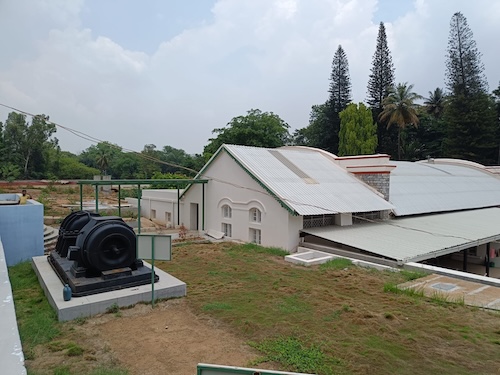
The Malleswaram installation featured an ingenious design comprising two settling tanks and six concrete filters, with a clean water reservoir positioned beneath the filtration units. At its operational peak, this facility processed an impressive 3 million gallons daily, serving both the expanding city and the C&M Station. The infrastructure grew progressively with additional storage tanks, and by the 1930s, it also integrated water from the newly established Thippagondanahalli treatment works, creating a comprehensive water supply network.
Legacy and Preservation
Today, these historic installations remain visible in Malleswaram, standing as monuments to early urban planning vision. Although the Jewell Filters no longer operate and the elevated tower tank that once provided wash water for the filtration system has been decommissioned, numerous storage tanks continue to serve the community. The serene grounds surrounding the facility offer visitors a tranquil environment, providing an ideal conclusion to any exploration of this culturally rich neighborhood.
Impact on Bengaluru's Development
This pioneering water treatment infrastructure proved instrumental in supporting Bengaluru's rapid urban growth and industrial advancement during the late 19th and early 20th centuries. The establishment of such sophisticated facilities demonstrated remarkable foresight by the city's early planners in addressing complex urban challenges and significantly enhancing residents' quality of life. The Combined Jewell Filters not only guaranteed a dependable supply of treated drinking water but also enabled the city's transformation into a major urban center.
A Living Heritage
While contemporary development pressures continue to reshape the area and long-time residents lament the disappearance of familiar landmarks, Malleswaram preserves its essential character as a leafy, culturally vibrant district that embodies Bengaluru's rich heritage and progressive spirit.
Source:
Discovering Bengaluru, Meera Iyer. (192).
Jewels Filters
